Walk through any modern facility – a factory floor, a data centre, a transport hub – and you’ll see impressive machinery, control systems and infrastructure humming with activity. What you won’t notice are the small components quietly protecting it all.
Among the most important of these are industrial fuses.
They are simple devices, often inexpensive compared with the equipment they protect, yet they perform one of the most critical roles in electrical safety. When something goes wrong in an electrical system, a fuse is designed to sacrifice itself instantly, disconnecting dangerous currents before they can cause damage.
When a fuse performs correctly, the result is uneventful: the circuit is interrupted, the fault is isolated and operations can resume quickly once the problem is resolved.
When it doesn’t, the consequences can be severe.
A small device with a big responsibility
At its simplest, a fuse is a protective link placed in an electrical circuit. If the current flowing through that circuit exceeds a safe level – whether due to an overload or a short circuit – the fuse element melts and breaks the connection.
That momentary interruption can prevent catastrophic outcomes. The fuse acts as a frontline defence. It isolates faults locally, preventing them from escalating into system-wide failures
Without that protection, excessive current can overheat cables, destroy expensive equipment, ignite insulation and even cause fires or explosions. In this sense, the fuse acts as a deliberate weak point in the system, a component designed to fail safely before anything else does.
Industrial environments rely on this principle every day. Motors starting up, transformers handling large loads, or power distribution systems dealing with sudden faults all depend on reliable protection.
A fuse must therefore perform a delicate balancing act. It must allow normal current, including brief surges such as motor start-ups, to pass unhindered. But when a genuine fault occurs, it must react instantly and decisively, containing and extinguishing the resulting arc to safely break the circuit before damage spreads.
Not all fuses are created equal
That ability is not accidental. It depends on meticulous engineering and strict quality control. Such precision is what separates high-quality industrial fuses from cheaper alternatives.
From the outside, many industrial fuses appear identical. They may share similar dimensions, markings and ratings. Yet what lies inside the casing determines whether they perform reliably under fault conditions.
Several factors influence fuse performance:
- The precision of the fuse element that melts during an overcurrent event
- The quality of materials used in the fuse body and end connections
- The arc-quenching medium that suppresses electrical arcs when the fuse operates
- The accuracy of the fuse’s time-current characteristics
In high-quality fuses, these components are manufactured with extremely tight tolerances.
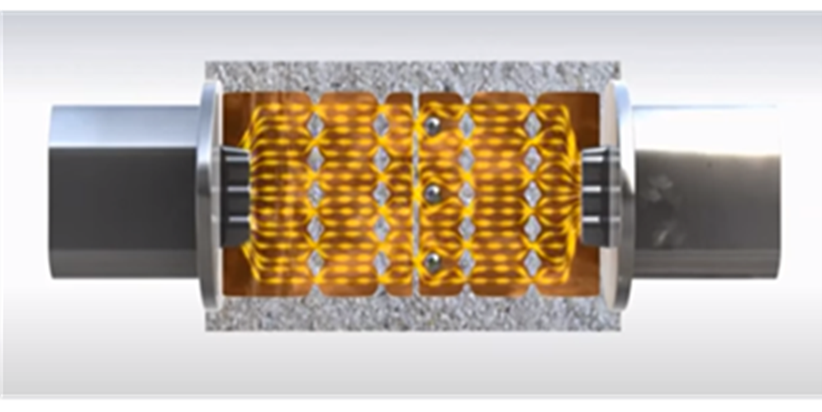
For example, when a fuse operates under fault conditions, the fuse element vaporises and an electrical arc forms. High-purity quartz sand or similar materials are used inside the fuse to extinguish this arc quickly and safely. If the filler material is impure or poorly packed, the arc may not be contained effectively.
The result can be catastrophic.
A fuse that cannot control the arc properly may rupture, eject molten material or fail to interrupt the current altogether.
The difference between safe operation and dangerous failure often comes down to details that are invisible to the naked eye.
The importance of certification
Because the stakes are so high, industrial fuses are subject to rigorous international standards.
Certification bodies test fuses under extreme conditions to confirm that they perform exactly as specified. These tests assess key parameters such as:
- Breaking capacity (the maximum fault current the fuse can interrupt)
- Time-current characteristics (how quickly it responds to overloads)
- Temperature tolerance
- Mechanical integrity and safety under fault conditions
When a fuse carries a recognised certification mark, it represents far more than administrative compliance. It signals that the product has been independently verified to operate safely under demanding electrical conditions.
In practical terms, certification is a contract of trust between manufacturer, installer and end user.
Without that assurance, engineers and operators are forced to rely on assumptions, an uncomfortable position when dealing with high-energy electrical systems.
When protection fails
Electrical faults are an inevitable reality in any complex system. What determines the severity of the outcome is how effectively those faults are contained.
If a fuse fails to operate when it should, the results can escalate rapidly.
One of the most serious risks is electrical fire. Excessive current can heat cables and insulation beyond their safe limits, igniting surrounding materials. Electrical fires are particularly dangerous because they often begin inside panels, walls or equipment enclosures where they are difficult to detect early.
Another risk is irreversible equipment damage. Motors, transformers, drives and power electronics represent major capital investments. If fault currents are allowed to pass unchecked, these assets can be destroyed in seconds.
There are also operational consequences. Equipment failures lead to unplanned downtime, lost production and expensive repairs. In sectors where continuity is critical – manufacturing, data processing or energy infrastructure – even a brief outage can carry significant financial implications.
Ironically, these outcomes are sometimes triggered by attempts to save money.

The hidden cost of cheap components
Industrial fuses represent a tiny fraction of the cost of the systems they protect. Yet they are sometimes treated as interchangeable commodities, with purchasing decisions based primarily on price.
That assumption can prove dangerously misleading.
Lower-cost products may achieve similar external specifications while compromising on internal materials, manufacturing precision or quality assurance. These compromises can lead to inconsistent performance.
In some cases, the fuse may trip unnecessarily, interrupting normal operations and causing avoidable downtime.
In more serious cases, the fuse may fail to operate during a fault, allowing damaging currents to flow through the system.
Either scenario undermines the entire purpose of the device.
Viewed in this context, the price of a high-quality fuse is not an expense but an insurance policy, one that protects equipment worth thousands or even millions.
Understanding the whole system
It is also important to recognise that a blown fuse often tells a story.
A fuse that operates repeatedly may indicate deeper problems in the system: persistent overloads, poor ventilation causing heat build-up, or environmental conditions such as corrosion or vibration affecting connections.
Simply replacing the fuse without investigating the underlying cause risks repeating the same failure.
Effective electrical protection therefore involves more than selecting a component from a catalogue. It requires understanding the application, the operating environment and the characteristics of the equipment being protected.
Choosing the correct fuse type – whether fast-acting, time-delay or specialised for motors, semiconductors or DC systems – is critical to achieving the right balance between protection and operational continuity.
The quiet Importance of getting It right
Fuses rarely attract attention. Unlike large electrical equipment or sophisticated control systems they protect, they are designed to remain invisible until the moment they are needed.
Yet when that moment arrives, everything depends on them working exactly as intended.
In that sense, industrial fuses are among the quietest yet most important guardians of electrical safety. They protect equipment, infrastructure and ultimately the people who depend on those systems every day.
Their role is simple: when danger appears, they step in and take the hit.
But that simple act only works if the fuse has been designed, manufactured and certified to the highest standards.
In electrical protection, reliability is not a luxury. It is a necessity.
And when the moment comes for a fuse to do its job, there is no room for pale imitations.
Harsha Raghavan
General Manager
Lawson Fuses