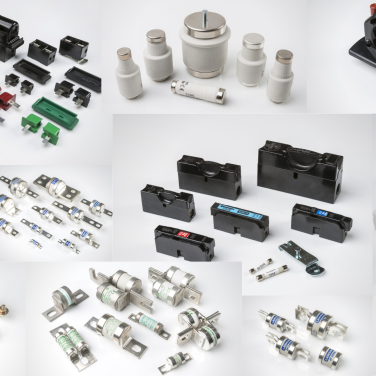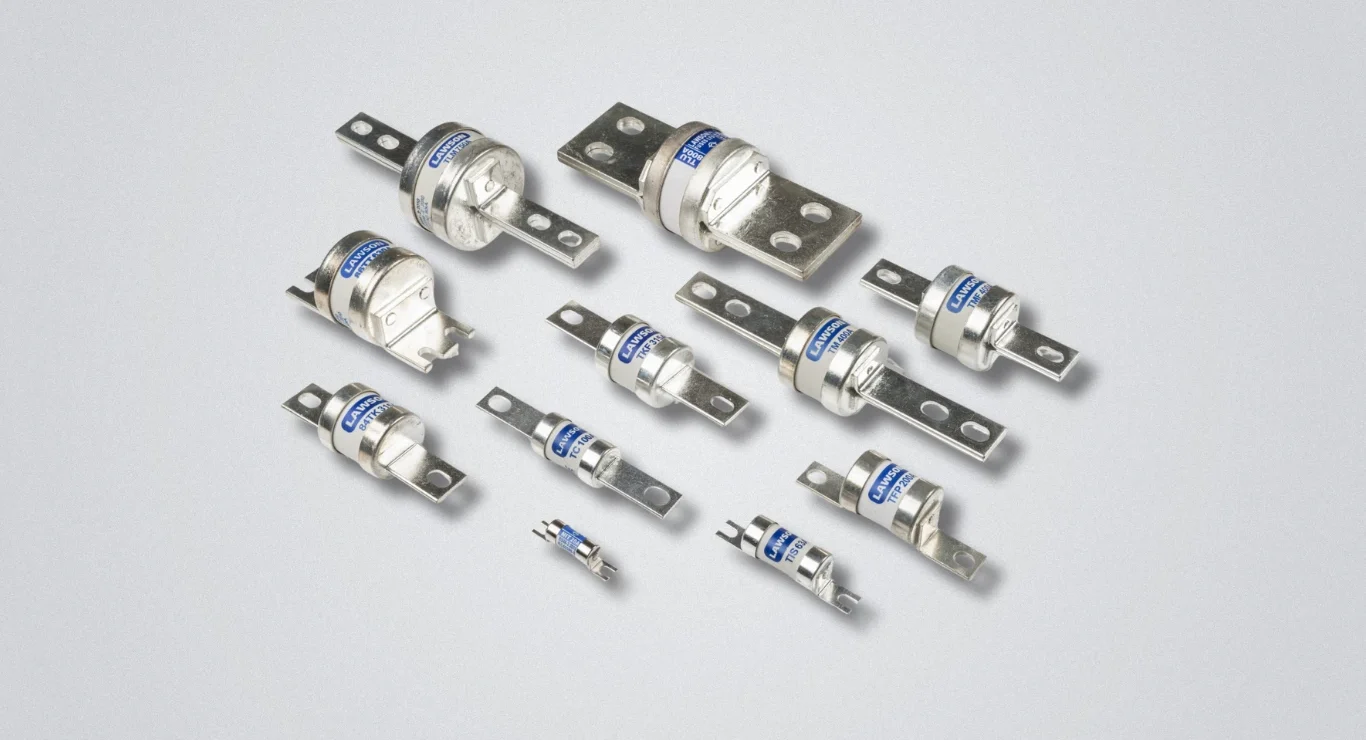
Standard fuses are used in a variety of places, including residential buildings, electrical appliances, industrial circuits and equipment, and in automobiles. Their primary goal is to break the circuit in the event of an overcurrent to protect the connected appliances and devices. Fuses also prevent electrical fires caused by overloads and short-circuits. Overall, a standard fuse and holder are the key components for electrical safety.
That being said, standard fuses have general characteristics and limited functionalities. While these functionalities may suffice for residential and small-scale applications, they fall short in providing adequate protection for large-scale industries. Thus, meeting the electrical protection requirement at an industrial site requires custom-fuse solutions. These fuses are specifically designed for the manufacturer’s requirements, including rated voltage, rated current, breaking capacity, and environmental factors such as heat tolerance and durability.
Let’s take a deeper look at the custom fuse solutions and how they offer a significant boost to electrical security.
Limitations of Standard Fuses and How Custom Fuse Solutions Overcome Them
A standard HRC fuse or any other kind of fuse has general characteristics that make it suitable for offering standard-level protection. On the contrary, custom fuses are designed for specific purposes. Custom fuses by Lawson Fuses overcome the limitations of standard fuses with their purpose-specific design. The following points will explain the benefits of custom fuses over standard fuses:
1. Adequate Safety at Extreme Conditions
The industrial environment is unforgiving due to extreme temperatures, constant vibration, shockwaves, moisture, and chemical exposure. And fuses are expected to survive these conditions while providing optimal electrical protection. Custom fuse carrier by Lawson Fuses is built using industrial-grade materials for enhanced security. On top of that, their precise design ensures a perfect fit, keeping the fuses firmly connected in the circuit despite consistent vibrations and shockwaves.
2. Flexible Electrical Safety
One major issue with standard fuses is their limited and rigid functionality. However, large-scale manufacturers demand a flexible solution that aligns with their up-scaled electrical protection needs. Fuses that are designed for a particular application offer flexible solutions, such as:
- They are manufactured to match the required current rating and overload currents effectively,
- Their size, shape, and holder design can be manufactured in accordance with the manufacturer’s equipment specifications,
- Custom fuses also enhance reliability further through system-level optimization.
3. Versatile Response Timing
Standard fuses either have a slow or a fast response time, thereby limiting production efficiency and productivity. But customized fuses can have adjustable fuse-blow characteristics tailored to the industrial electrical load and specific needs. It allows manufacturers to achieve the required response timing with their finely tuned custom fuses.
4. Cost Efficiency in the Long Term
Designing and manufacturing a custom HRC fuse requires extra resources and time, increasing the initial cost of the overall fuse setup. However, once completed and integrated into industrial circuits, custom fuse solutions demonstrate optimal cost efficiency. They provide manufacturers and producers with reliable protection, preventing damage to expensive equipment. Additionally, custom fuses require less maintenance than standard fuses, saving costs on that part as well.
5. Industry- and Purpose-Specific Fuses
Standard fuses are industry-specific, meaning they can provide basic protection. Meanwhile, a custom fuse is purpose- or application-specific. This makes a massive difference because two manufacturers or producers from the same industry can have distinct electrical safety requirements. Custom fuses designed for specific purposes/applications provide more precise and reliable protection.
6. Seamless Fuse Integration
At Lawson Fuses, we first understand your requirements with a thorough inspection. This allows us to design fuse solutions that integrate seamlessly with your existing system. Consequently, you can be assured of quick installation without any compromise with safety.
Here is a table with concise distinctions between standard and custom fuses, on multiple factors:
| Factor | Standard Fuses | Custom Fuses |
| Definition | Pre-manufactured fuses with fixed ratings, sizes, and characteristics designed for general applications. | Tailor-made fuses designed to meet specific electrical, mechanical, or environmental requirements. |
| Design Flexibility | Limited — available in predefined voltage/current ratings and sizes. | Highly flexible — can be customized for current, voltage, size, material, and response time. |
| Applications | Standard consumer electronics, automotive, and industrial machines with standard protection needs. | Specialized systems like aerospace, medical devices, defense, renewable energy, or custom-built machinery. |
| Lead Time | Readily available; short lead time due to mass production. | Longer lead time due to design, prototyping, and testing processes. |
| Cost | Generally lower due to bulk manufacturing. | Higher initial cost due to design and production customization. |
| Performance | Meets general safety and performance standards (UL, IEC, etc.). | Optimized for enhanced performance in specific environments — e.g., high temperature, vibration, or surge conditions. |
| Testing & Certification | Pre-certified for general use. | Requires individual testing and certification based on custom design. |
Customizable Components in a Fuse and How to Choose the Right One
We will now go through the customizable components of a fuse and understand the impact of each component on the fuse’s characteristics:
- Fuse Element
- The fuse element is the core of the fuse and governs its key characteristics. For example, the fuse element in a quick-response semiconductor fuse is designed with notches and a reduced cross-sectional area. Similarly, the design, dimension, and material of the fuse element impact its response time, breaking capacity, and I2T curve.
- Key Considerations:
- Material Type
- Operating Temperature
- Compliance Standards
- Cost
- For more in-depth information on considerations, contact the experts at Lawson Fuses.
- Build Material of the Fuse Body
- The fuse body provides insulation, protects the fuse from external environmental factors, and prevents damage to nearby circuits by containing the electrical arcs. Therefore, when choosing the building material for your fuse, make sure it can tolerate the challenging industrial conditions.
- Filling Materials for Additional Protection Against Arcs
- Commonly used in an HRC fuse, filling materials are critical for fuses that are used in industrial circuits with a significantly higher current and voltage rating. Here is a list of filling materials that are used in fuses with their characteristics:
- Silica Sand (Quartz Powder):
- Most widely used
- Absorbs arc energy and quenches it effectively
- Ideal for high-rupturing capacity (HRC) fuses
- Boron Silicate Glass Beads:
- Used in miniature and precision fuses
- Provides consistent arc suppression and insulation
- Air:
- Used in low-voltage or fast-acting fuses
- Simple, cost-effective, but limited arc control
- Vacuum:
- Eliminates oxidation and improves arc extinction
- Common in high-voltage or aerospace fuses
- Inert Gas (e.g., Nitrogen, SF₆):
- Reduces metal vaporization and arc spread
- Used in high-voltage and industrial power systems
- Ceramic Powder / Alumina:
- Provides mechanical strength and thermal resistance
- Often used as a filler in specialized or heavy-duty fuses
- End Connection Type: For a Seamless Circuit Integration
- The end connections of a fuse are responsible for properly connecting the fuse in the circuit. Picking the correct type of end connections enhances the fuse’s reliability by a significant margin. It provides effective current transfer, mechanical support, and superior heat dissipation. As the leading industrial fuse supplier, Lawson Fuses delivers a wide range of end connection types for fuses to satisfy the unique needs of industrial manufacturers.
- Design and Dimensions
- The design and dimensions of a fuse are essential to prevent loose connections. Each custom fuse by Lawson Fuses is designed and manufactured in an ISO 17025-accredited manufacturing facility. This allows us to manufacture fuses with extremely precise dimensions.
- Key Considerations:
- Current Rating vs. Cross-Section.
- Mounting Compatibility
- Thermal Dissipation
- Installation Space
- If you have questions or need an in-depth explanation, feel free to reach out!
- Fuse Holders for External Protection and Easy Replacement
- Custom fuses do not fit in standard fuse holders or a standard fuse carrier. Therefore, each custom fuse requires customized holders and carriers to ensure a perfect fit. This also allows for a robust connection with no loose ends and also makes the fuse replacement process highly convenient.
- Critical Performance Characteristics
- Current & Voltage Rating: Set to match circuit load → ensures optimal protection without nuisance blowing.
- Breaking Capacity: Designed for specific fault levels → guarantees safe interruption under high fault currents.
- Time-Current Curve: Custom delay or fast-acting response → matches load behavior (motors, electronics, etc.).
- Indicator Feature: Include a visual or electrical indicator → simplifies fault detection and maintenance.
Why Trust Lawson Fuses for Custom Fuse Solutions?
At Lawson Fuses, we don’t just manufacture fuses; we design and produce supreme-grade electrical safety solutions for small, medium, and large-scale industries. As the leading industrial fuse supplier, we meet their growing, diverse requirements with custom fuses that enhance and optimize electrical safety. We prioritize high-grade materials for reliability and ensure our fuses comply with critical compliance regulations.
How We Manufacture Custom Fuses
Let’s take a deeper dive into the multiple-phased approach for manufacturing custom fuses:
Requirement Analysis
– In this step, we gather your specifications and custom requirements
– Determine voltage, current, response time, and environment
↓
Concept Design
This phase covers the crucial design of the fuse
– Choose fuse type (cartridge, surface mount, resettable, etc.)
– Select materials (fuse element, casing, terminals)
– Simulate design performance
↓
Prototyping
– Build a prototype based on the design
– Conduct functional testing
– Validate electrical and thermal performance
↓
Testing & Validation
– Perform endurance and short-circuit tests
– Check compliance with standards (IEC 60269, ENA 12-6, ASTA, Intertek, UL)
Perform essential adjustments depending on the prototype performance and your reviews
↓
Manufacturing
– Begin large-scale production
– Apply quality assurance and inspection protocols
– Package and label components
↓
Quality Control
– Final inspection (mechanical & electrical)
– Verify consistency across batches
↓
Delivery & Support
– Ship to client
– Provide technical documentation and post-delivery support
Share Your Custom Requirements with Us!
Get in touch with our experts to explain what you are looking for, and we will get back to you with concrete, robust electrical safety solutions.
FAQs
Q.1: Why should I use a fuse?
A: Fuses are the critical electrical safety components that break the circuit in overcurrent situations. They break the circuit when the current exceeds a dangerous limit, preventing the faulty current from reaching sensitive electrical appliances. Moreover, fuses protect expensive industrial equipment and automobiles and have a wide range of applications.
Q.2: How is an HRC fuse different from a standard fuse?
A: HRC or high rupturing capacity fuse has a significantly higher breaking capacity than standard fuses. They can safely interrupt high fault currents and are generally used in industrial applications.
Q.3: Do I need custom fuses for my residential needs?
A: Residential applications do not require customized fuses. In this case, a standard fuse is sufficient for adequate protection. Custom fuses are generally designed for specific industrial needs.
Q.4: How much will the fuse installation cost for my industrial plant installation?
A: The exact cost for fuse installation would require a complete specification of your plant, along with custom requirements (if any). But at Lawson Fuses, you will surely get highly cost-effective fuses. So, fill this enquiry form, and our experts will get back to you shortly to proceed with the cost analysis and solution design.