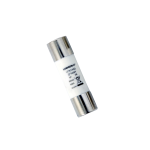
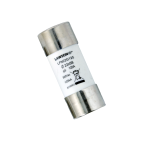
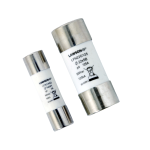
Q1. What are Cylindrical Fuse Links?
Cylindrical Fuse Links are barrel-shaped cartridge HRC fuse-links used in industrial and commercial electrical protection. They have a ceramic or glass cylindrical body with metal end caps (ferrules) and are installed in modular cylindrical fuse holders mounted on a DIN rail. The Lawson Type LFN is a range of gG Cylindrical Fuse links covering four standard body sizes — 8x31mm, 10x38mm, 14x51mm, and 22x58mm — rated at 400V, 500V, and 690V a.c. for use in industrial control panels, distribution boards, and switchgear.
Q2. What is the difference between gG and gM cylindrical fuse links?
A gG Cylindrical Fuse (general purpose, full-range) provides protection against both overload currents and short-circuit currents and is the standard choice for cable and sub-circuit protection. A gM cylindrical fuse-link is a motor circuit protection fuse with a dual rating — it can withstand the short-duration high inrush current of motor starting without operating, while still protecting the circuit against sustained overloads and short circuits. In the Lawson LFN range, gM variants are selected by replacing ‘G’ with ‘M’ in the list reference — for example, LFN10G16 (gG, 16A) becomes LFN10M16 (gM, 16A).
Q3. What is a 10×38 Fuse and what current ratings are available?
A 10×38 Fuse is a cylindrical fuse-link measuring 10mm in diameter and 38mm in length — the most widely used cylindrical fuse size in industrial control panels. The Lawson LFN 10G range covers current ratings of 1A, 2A, 4A, 6A, 8A, 10A, 12A, 16A, 20A, 25A, and 32A in the gG general purpose category, with gM motor protection variants also available across the same current range. The LFN 10G / LFN 10M is compatible with the Lawson MSC 101 modular fuse holder (32A rated).
Q4. What is a 14×51 Fuse (14×52 Fuse) and when is it used?
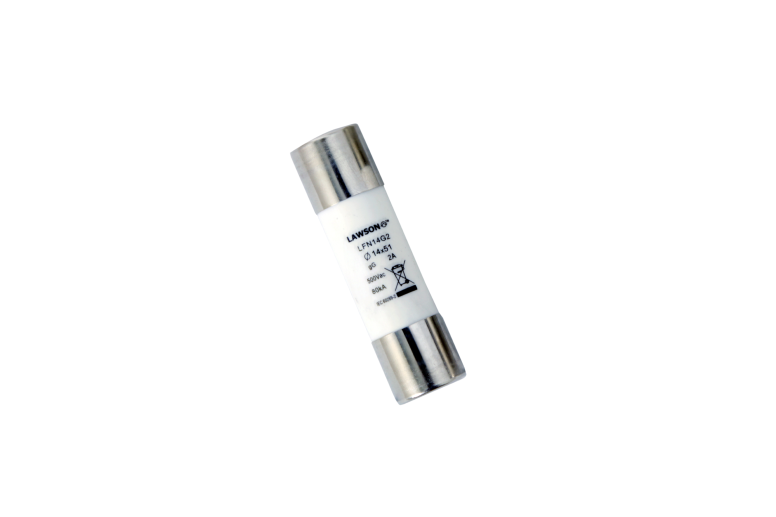
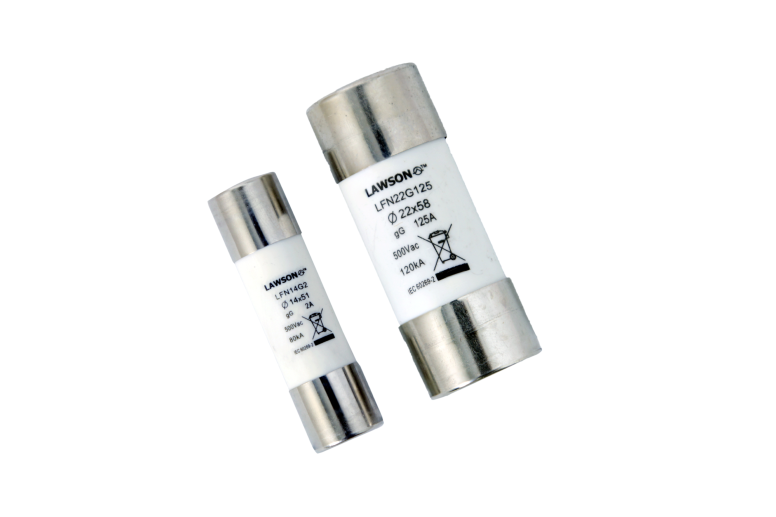
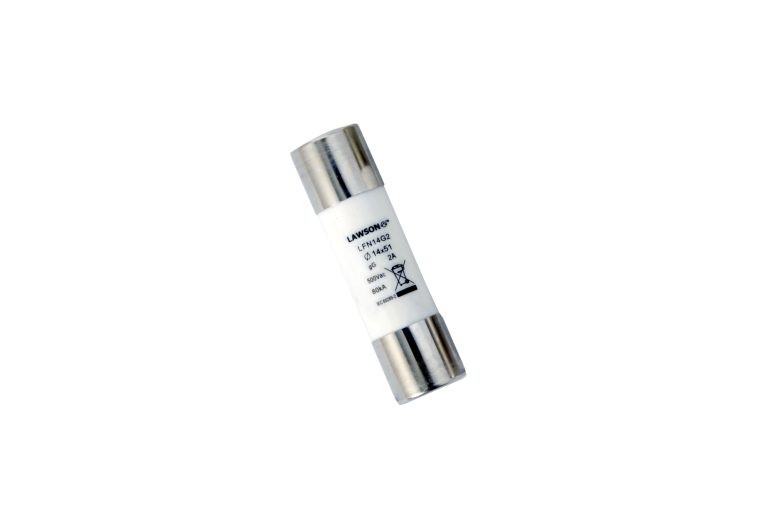
The 14×51 Fuse (also referenced as 14×52 Fuse) is a cylindrical fuse-link measuring 14mm in diameter and 51mm in length — a larger format used for mid-range current protection up to 50A. The Lawson LFN 14G (gG) and LFN 14M (gM) are used for sub-circuit protection, transformer primary fusing, and motor circuit applications at higher current ratings than the 10×38 format. The LFN 14G / LFN 14M is compatible with the Lawson MSC 141 modular fuse holder (50A rated).
Q5. What is a 22×58 Fuse and what applications does it cover?
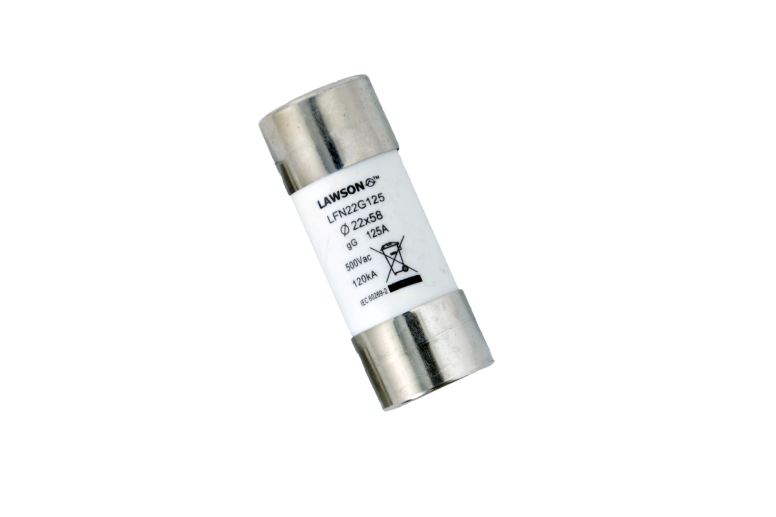
The 22×58 Fuse is the largest cylindrical fuse-link format in the Lawson LFN range, measuring 22mm in diameter and 58mm in length, rated up to 125A. The LFN 22G (gG) range includes ratings of 63A, 80A, 100A, and 125A for use in high-current main distribution, incomer protection, and busbar sub-circuit fusing. Motor protection variants (LFN 22M) are available for larger motor circuit applications. The LFN 22G / LFN 22M is compatible with the Lawson MSC 221 modular fuse holder (125A rated).
Q6. What voltage ratings are available for the Lawson LFN Cylindrical Fuse Links?
The Lawson Type LFN Cylindrical Fuse Links are rated for use at 400V, 500V, and 690V a.c. — covering standard UK and European industrial three-phase supply voltages. The 690V rating makes the LFN range suitable for demanding industrial environments including offshore, marine, and heavy industrial applications where higher supply voltages are used.
Q7. Why do Cylindrical Fuse Links have ceramic bodies?
Ceramic bodies are used in industrial Cylindrical Fuse Links because ceramic can withstand the extreme internal pressures and thermal shocks generated when the fuse-link operates under high fault current conditions. Ceramic also provides excellent electrical insulation and is chemically resistant to the arc products generated during fuse operation — ensuring a safe, contained interruption without risk of body fragmentation or arc flashover to adjacent components.
Q8. What are silver-plated contacts and why do they matter?
Silver-plated contacts (also called silver-plated ferrules) on Cylindrical Fuse Links provide a low-resistance, corrosion-resistant contact surface between the fuse-link and the fuse holder clips. Silver has excellent electrical conductivity and resists oxidation over time — ensuring that the contact resistance between fuse and holder remains low and consistent throughout the service life of the installation. High contact resistance can cause localised heating and power loss, so silver-plated contacts are important for reliable performance in industrial applications.
Q9. How do I select the correct Cylindrical Fuse Link for my application?
Selecting the correct Cylindrical Fuse Links requires matching four key parameters: the body size (8.5×31.5, 10×38, 14×51, or 22x58mm) to the fuse holder installed; the voltage rating (400V, 500V, or 690V) to the supply; the current rating to the circuit design current; and the utilisation category (gG for general purpose or gM for motor circuit protection) to the load type. For gM motor circuit selection, the motor full-load current and starting current ratio must also be considered.
Q10. Are solid/neutral links available to complement the LFN range?
Yes. Lawson supplies solid/neutral links (SLLFN series) for all four body sizes in the Type LFN range — SLLFN 820 (8x31mm, 20A), SLLFN 10 32 (10x38mm, 32A), SLLFN 14 50 (14x51mm, 50A), and SLLFN 22 125 (22x58mm, 125A). Solid links are used in place of fuse-links in the neutral conductor of three-phase or four-wire circuits where overcurrent protection of the neutral is not required but a secure, reliable neutral connection is still needed within the fuse holder assembly.