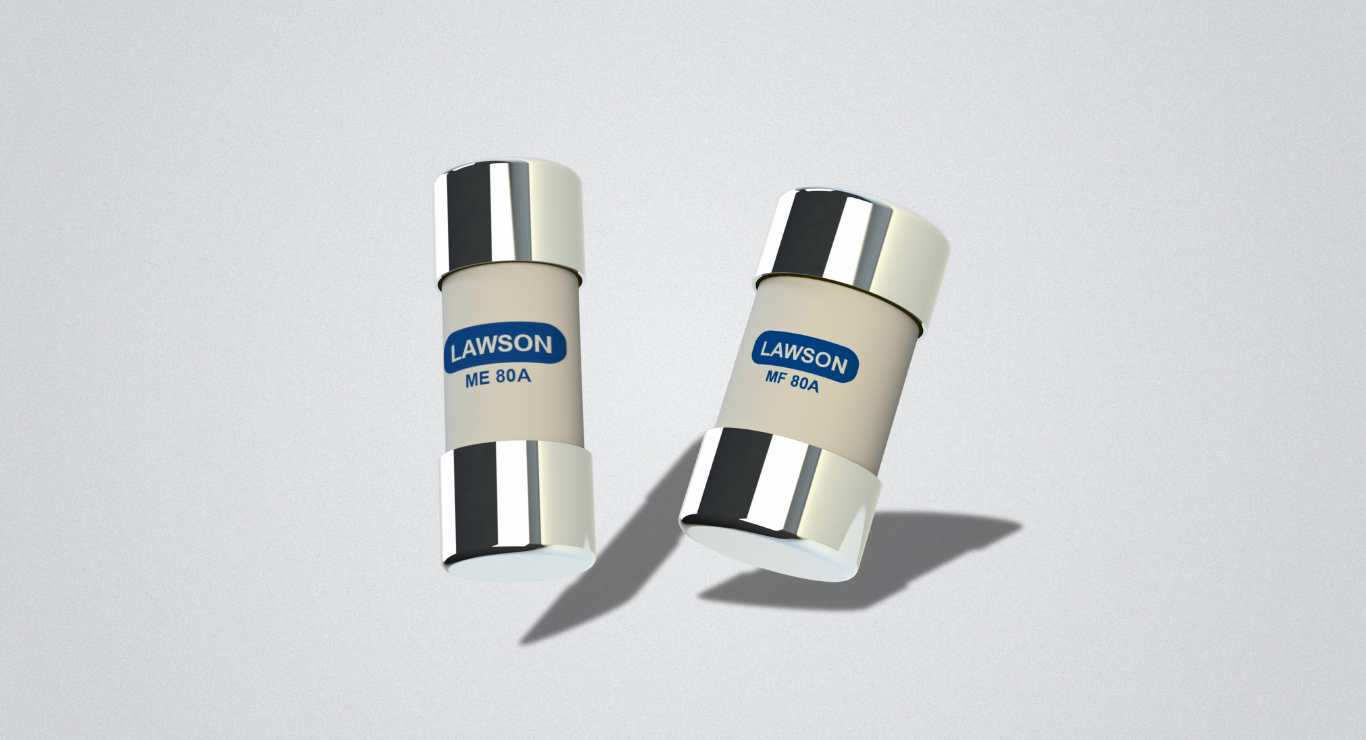
Understanding the Industrial and Residential Applications of a Cylindrical Fuse
Cylindrical fuses get their name from their signature cylindrical body and are used in industrial and residential settings. Their primary responsibility is to protect the electrical appliances from overloads and short circuits. A significant benefit of cylindrical fuses is that they are available in various utilization categories.
For example, a LFN ME&MF type cylindrical fuse of gG category is ideal for single or three-phase house services and protects from higher short-circuit faults. On the other hand, aM category fuses are used to safeguard motors from overloads and short circuits.
Additionally, cylindrical fuses come in a wide range of voltage 415,500V,690V and current ratings 2A-125A making them ideal for various applications. Low-voltage cylindrical fuses (ME&MF type) are used in residential applications, while high-voltage fuses (LFN type) provide protection on an industrial scale. Their compact design makes it easier to replace them in a fuse carrier after use.
Industrial Applications
- Power Distribution Systems: Transformers, circuit breakers, switchgear, and other components require slow-acting or time-delay cylindrical fuses to avoid unnecessary tripping. The full-range capabilities of LFN-type cylindrical fuse-links enable industries to manage a wide range of fault currents and overload conditions.
- Motor Protection: Motors require reliable protection from high inrush currents, overloads, and short circuits. Cylindrical HRC fuses are ideal due to their high breaking capacity.
- Industrial Equipment Protection: Arc quenching, high breaking capacity, compact size, reliable performance, and effective overcurrent protection make cylindrical fuses suitable for industrial equipment. Inadequate protection can lead to significant financial losses and increased downtime. Lawson Fuses offers LFN-type fuses with:
- Current ratings up to 125A
- Rated voltages: 400V a.c., 500V a.c., 690V a.c.
- Breaking capacity options: 20kA, 80kA, 120kA
- Industrial Automation Panels: Quick-response cylindrical fuses are used in automation panels to prevent machine failures. Their compact size and availability in various dimensions make them easy to integrate into control panels, PLCs, and relay circuits.
Residential Applications
- Main Distribution Board: Cylindrical fuses and holders are connected to the main distribution board to protect the entire household’s electrical system. They serve as the first line of defence against overloads and short circuits.
- Electronic Devices: Cylindrical fuses are integrated into electrical appliances to protect against overcurrent and power surges. Fast-acting or quick-blow fuses are typically used to prevent fault currents from damaging appliances.
Advantages and Disadvantages of Cylindrical Fuses
Cylindrical fuses offer several advantages, but also have some limitations. Here’s a summary:
Advantages
- Available in standard compact sizes, making installation straightforward
- Refer to this link for detailed information about ME & MF-type cylindrical fuses by Lawson Fuses.
- Offered in various sizes and current ratings to suit different requirements
- Reliable operation, ideal for protecting valuable household and industrial equipment
- Capable of quenching electrical arcs during overloads and short circuits, reducing heat and explosion risk
- Higher breaking capacity than standard fuses — Lawson Fuses’ cylindrical HRC fuses can safely interrupt currents from 20kA to 120kA
- Cost-effective protection with low installation costs
Disadvantages
- Single-use only — must be replaced after interrupting fault current
- May trip unnecessarily in surge-prone circuits, increasing maintenance costs
- Limited suitability for complex electrical systems
Working and Construction of a Cylindrical Fuse
To fully understand cylindrical fuses, it’s important to know their components and construction:
Construction and Components
- Fuse Body: Compact cylindrical casing, typically made from ceramic or glass for heat resistance and durability
- Fuse Element: Thin metal wire (usually tin, copper alloy, or silver) that melts when fault current exceeds safe limits, breaking the circuit
- End Caps: Contact points for connection and easy replacement; available in ferrule, knife-blade, and bolt-on types
- Filling Material: Sand or quartz used to suppress electric arcs during high fault currents, preventing fire and explosion
Lawson Fuses: Providing High-Grade Protection Since 1938
At Lawson Fuses, we offer premium-quality fuses and reliable safety solutions for your valuable electronics. Our product range covers all major fuse applications, and our R&D team can design custom fuses to meet specific requirements. From design to delivery, we ensure the highest standards of protection.
Contact us to learn more about our products or speak to an expert about custom fuse solutions and electrical safety.
For more news and information, please click here